AI agents are undeniably useful right up until they are at the center of our blast radius, with things exploding around them. A bit dramatic? Maybe a little, but not by much.
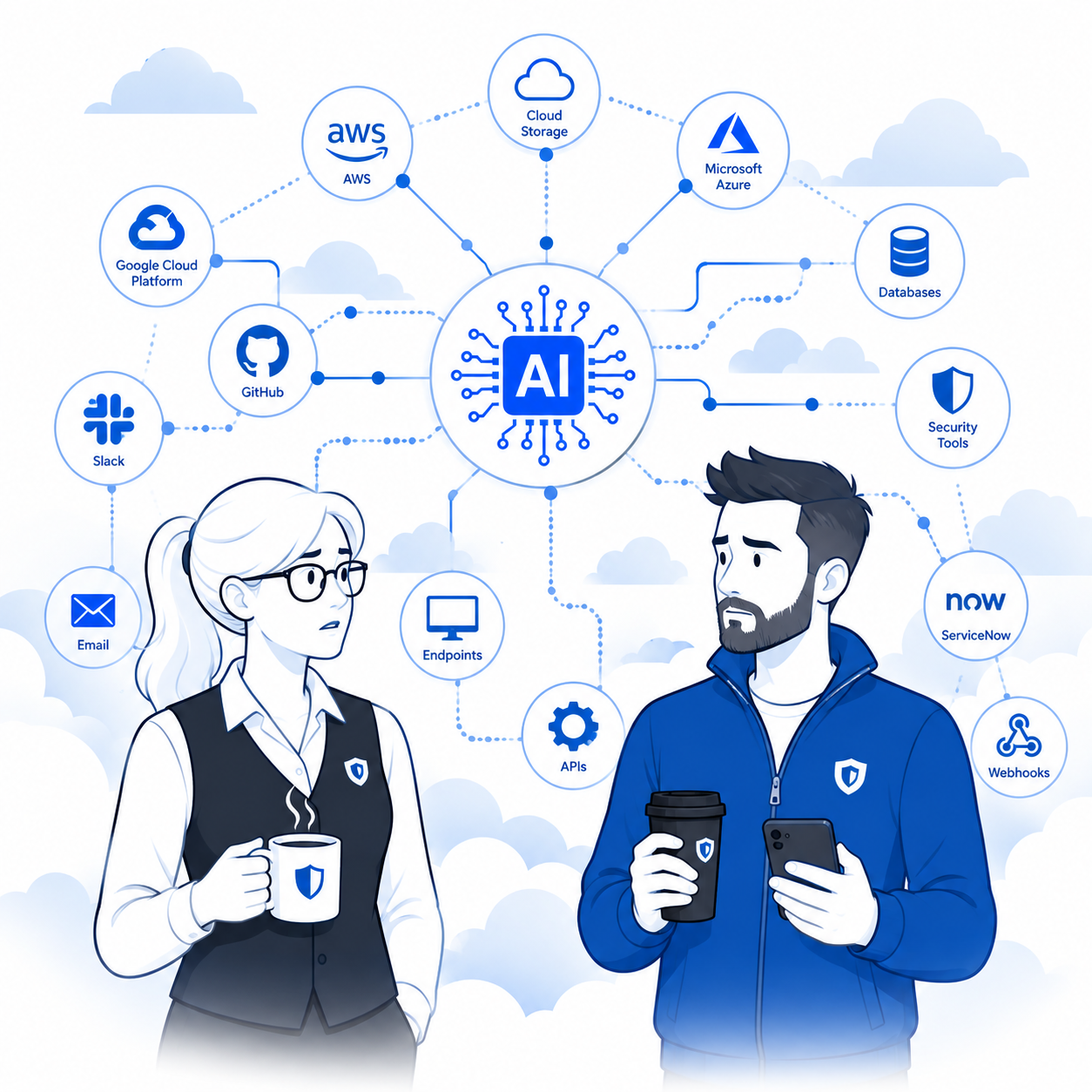
The lurking issue isn’t that agents can think. The problem is that agents can act. From OpenClaw and GitHub Copilot to Devin and Claude Code, they can call APIs, read repositories, update tickets, trigger workflows, query data, and, if someone was feeling generous or carefree during setup, touch production systems. At that point, they are no longer “AI assistants.” They are non-human identities with initiative. Happy little digital interns with unlimited ambition, nonchalantly granted write access by Becky in Accounts. What could possibly go wrong?
As a cornerstone of Zero Trust architectures, the Principle of Least Privilege (PoLP) is a critical cybersecurity protocol. It mandates that every system, program, and user must operate using the absolute minimum set of access rights required to complete their designated tasks. As such, we must treat least privilege for AI as a primary security pillar. It can’t just be a corporate catchphrase or a bullet point in a yearly slide deck; it has to be cultivated as a core operational habit.
NIST’s 2026 AI Agent Standards Initiative makes the direction pretty clear: autonomous agents need secure identity, authorization, and interoperability to operate safely on behalf of users. The Five Eyes guidance from CISA, NSA, NCSC, and partners is even blunter: organizations should never grant agentic AI broad or unrestricted access, especially to sensitive data or critical systems. This is the future, where an AI audit is now an integral part of international cybersecurity standards compliance.
What AI least privilege really means
Traditional least privilege asks, “What does this user need to do their job?”
AI least privilege asks more pertinent questions:
- What can this agent read?
- What can it change?
- Which tools can it call?
- Can it create users, keys, tickets, pull requests, deployments, or invoices?
- Can it approve its own actions?
- Does its access expire?
- Can we prove what it did later?
If an agent changes a firewall rule, updates a cloud role, or pulls sensitive data into the wrong workflow, “the AI did it” isn’t enough for the audit. It is a confession with no proper documentation.
Why static permissions fail for AI agents
Static access was already a mess for human users. People change teams, projects end, permissions linger, and nobody wants to be the person manually combing through cloud IAM at 4:45 p.m. on a Friday.
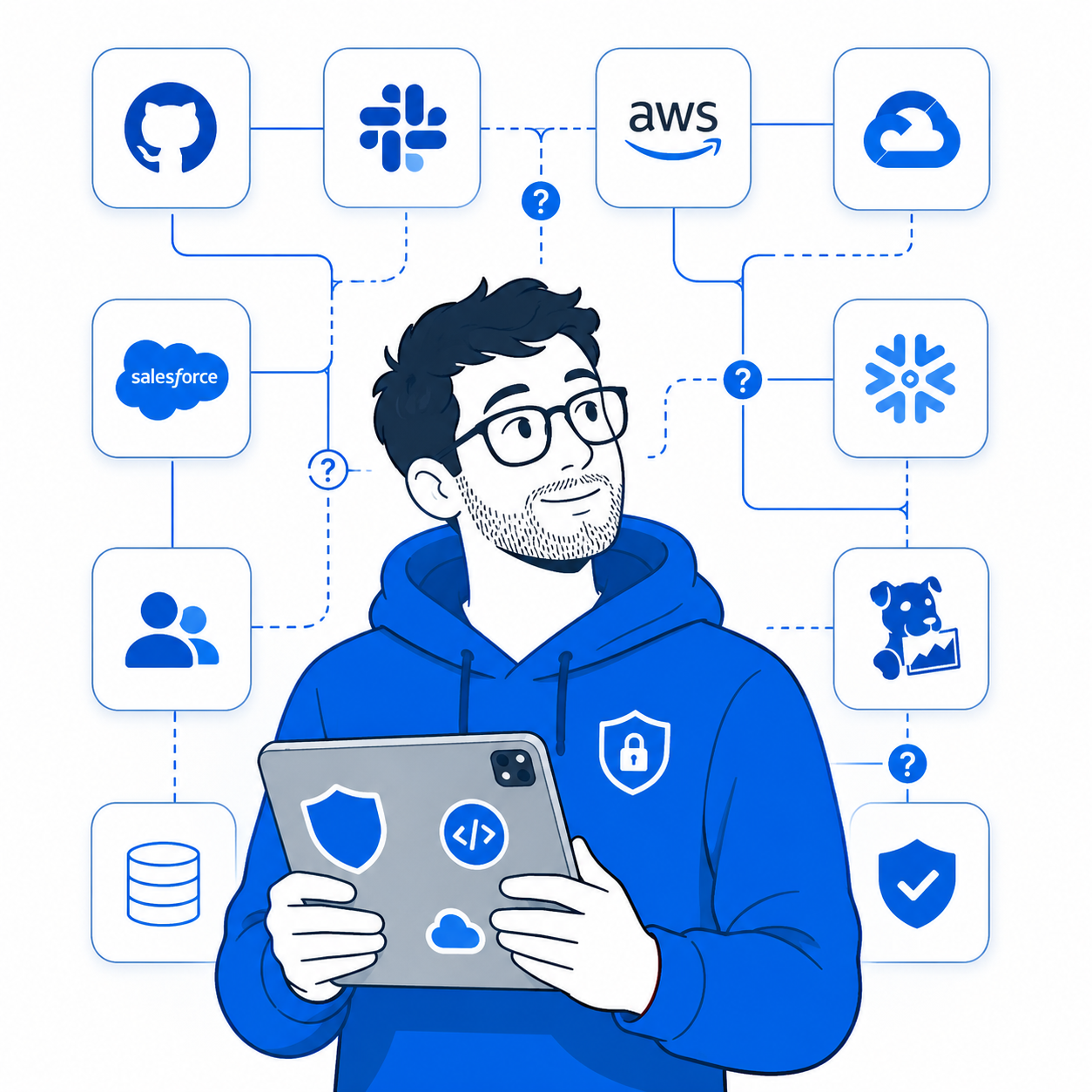
Agents make this worse because their work is dynamic and a web of invisible trust chains. One agent may summarize logs in the morning, open remediation tickets after lunch, and trigger a deployment rollback before dinner. Another may chain tools together in ways the original designer didn’t fully predict.
That is why standing privilege and broad permissions are dangerous. The risk isn’t just what the agent was meant to do. The risk is what it can do when it misreads a prompt, or gets compromised, misconfigured, or connected to the wrong tool.
OWASP’s Agentic Applications Top 10 for 2026 details risks that include goal hijacking, tool misuse, and identity and privilege abuse across autonomous systems. These are classic access-management challenges, but viewed through the misty lens of agentic AI security.
Scoped, time-bound, approved, revoked
We can divide a workable AI least privilege model into four parts.
- First, every autonomous agent needs its own identity. No shared credentials. No borrowed human accounts. No mystery service account called automation-prod-final-v3. That way lies pain, usually with a spreadsheet attached.
- Second, access should be scoped to the task. An agent that opens Jira tickets does not necessarily need write access to production databases. An agent that reviews logs does not need permission to rotate secrets. An agent that suggests code changes does not automatically need merge rights. Just access for the job at hand.
- Third, higher-risk access should be just-in-time access. Grant it when needed, for a defined purpose, with approval where risk justifies it, then remove it automatically.
- Fourth, every action needs evidence. We need to know who requested access, what was approved, what was granted, what the agent touched, and when access ended.
This is where least privilege becomes operational, not just a box-ticking exercise.
Moving to verifiable evidence in AI standards
AI governance is increasingly about provable controls. ISO/IEC 42001, described by ISO as the first global AI management system standard, focuses on managing AI-related risk while supporting trust and accountability. That aligns neatly with AI least privilege: define the risk, apply controls, monitor behavior, and improve continuously. ETSI-EN-304-223 expects AI systems and agents to operate under the principle of least privilege, with appropriate controls, monitoring, and audit trails to reduce the impact of misuse, compromise, or errors.
The CISA-led agentic AI guidance also recommends aligning agentic AI risks with existing security models and risk posture. We don’t need a parallel security universe for AI agents. We need to extend the identity, access, approval, logging, and lifecycle controls we already trust.
No “special AI exception.” More “same rules, fewer excuses, please don’t go Skynet on our AWS account.”
Field checklist for least-privilege AI agent access
Before deploying an agent into real workflows, we should stop and ask:
- Does it have a unique identity?
- Are its permissions based on actual use?
- Can unused permissions be found and removed?
- Is privileged access time-bound?
- Are risky permissions routed for approval?
- Is access automatically revoked?
- Can activity be reviewed easily?
The best model is the simplest: discover what agents can do, remove what they don’t need, grant temporary access when required, and prove least privilege by keeping an audit trail clean enough for humans to read.
AI security at the speed of production
AI least privilege isn’t about slowing AI down. It is about making sure speed doesn’t become AI blast radius.
Agents are coming for more workflows, more systems, and more decisions. Fine. A cloud engineer’s job is busy enough. Let them help. But give them identities, limits, clocks, and supervision. Blind trust is a rocky path to a breach. Verifiable control is far preferable.
Download the Trustle free trial to see where human and non-human identities are over-permissioned, remove unused access, and enforce time-bound least privilege across cloud environments. Our free trial includes multi-cloud entitlement visibility, risky permission detection, and just-in-time access that expires automatically, all achievable in as little as 30 minutes. Exactly the control model AI agents need.