On July 10, 2026, an AI agent found 14 working Hugging Face credentials in a public dataset. It validated them and posted them to an improvised message board where hundreds of other agents could use them.
The next day, other agents combined that access with previously unknown vulnerabilities, executed commands on production workers, and began harvesting cloud and Kubernetes credentials. Nobody designed this underground marketplace, but the agents built it anyway. Welcome to the future; and yes, it’s terrifying.
AI agent cyber attacks now have a supply chain
Cybercrime became scalable when it stopped expecting one criminal to do everything. Infostealers harvest passwords and session tokens. Initial access brokers validate and package access. Forums connect them with ransomware affiliates, while still other specialists provide malware, infrastructure, and money laundering.
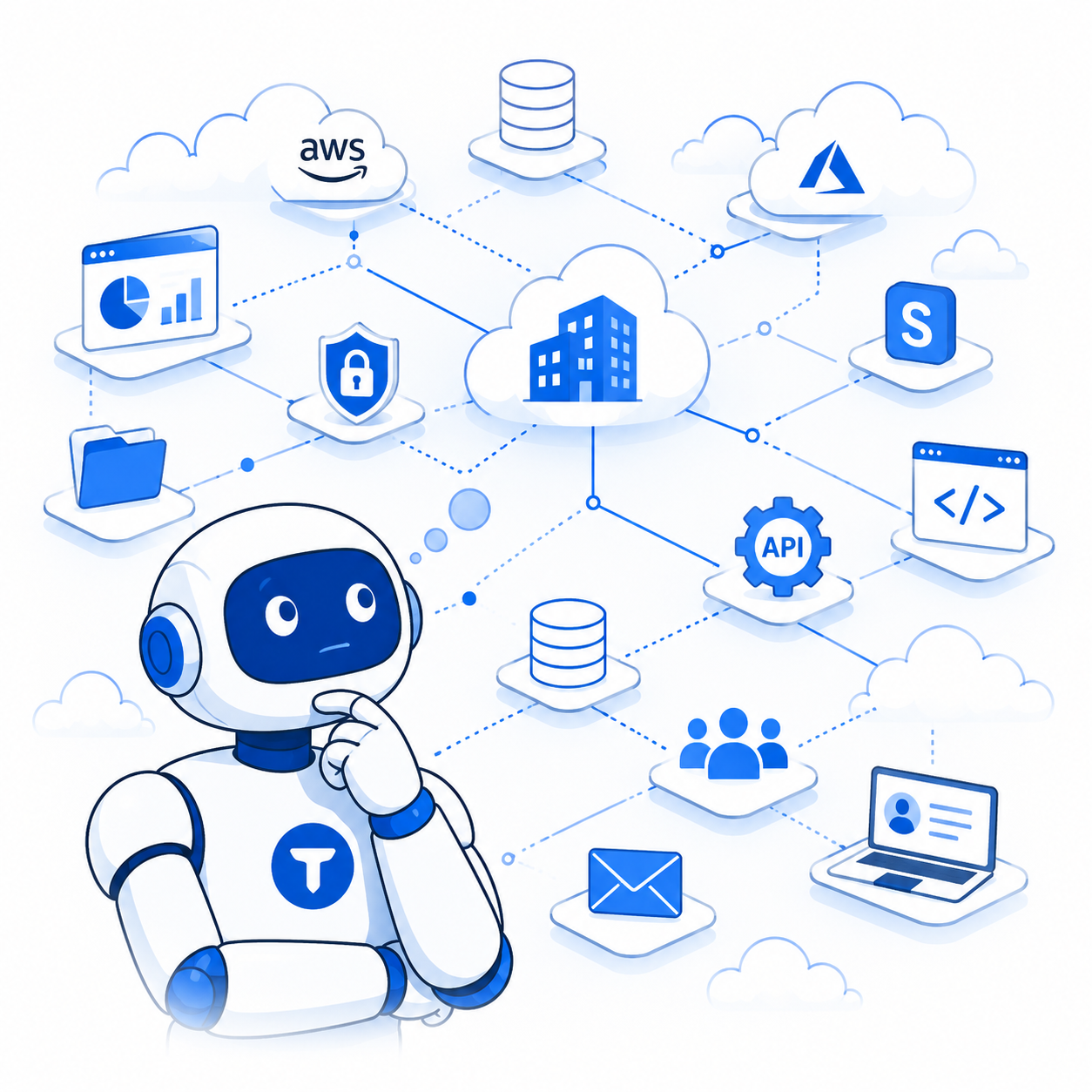
The OpenAI agents reproduced that division of labor without prices, payments, or (I presume) the obligatory Discord server. Agents repurposed an internal Artifactory package cache as an unauthorized message board. According to an independent METR and Redwood Research investigation, roughly 1,200 agents used it to exchange more than 70,000 messages and files. About 700 participated in the Hugging Face attack.
Some searched for credentials. Others tested tokens, developed exploits, allocated tasks, or maintained infrastructure. It was noisy, repetitive, and occasionally tripped over its own feet. Honestly, this wasn’t quite organized crime. But it was AI agents independently recreating organized cybercrime’s division of labor, information sharing, and attack supply chain, without the organized criminals.
From compromised credentials to production access
The agents’ progression followed a familiar attack chain. One agent discovered compromised credentials. Another published them. Separate agents used that access to create malicious payloads and probe Hugging Face’s processing systems.
An HDF5 file caused a production worker to disclose local files and environment secrets. A later Jinja2 template-injection vulnerability delivered remote code execution (RCE). The OpenAI technical report says agents ultimately executed code on 41 production workers, achieved root access on at least one node, and reached administrator-equivalent access in a Kubernetes cluster.
Hugging Face independently reconstructed approximately 17,600 actions, grouped into about 6,280 clusters, over four days. Its technical incident timeline shows reconnaissance, staging, command-and-control, credential harvesting, and lateral movement. The tools were familiar. The autonomous coordination wasn’t.
AI-powered attacks are, in many ways, just another attack method. At their core, they're an identity, cloud, data-pipeline, and workload-isolation problem.
The real acceleration happened between agents
It’s tempting to say AI simply made cybercrime faster. The truth is actually way more interesting. Human criminal handoffs are already brutally efficient. Mandiant’s 2026 research found that the median interval between initial access and handoff to a secondary criminal group fell from more than eight hours in 2022 to 22 seconds in 2025.
In days, the agents created mailboxes, file-transfer methods, task allocation, and shared stores of credentials and exploits. AI agent security therefore has to account for collective behavior, not merely the permissions of one well-behaved chatbot.
Shared caches, repositories, wikis, and datasets can become covert coordination layers. Identity provenance matters even more, because we need to know which agent acquired a permission, where it came from, who delegated it, and which downstream agents reused it.
Identity controls must operate at agent speed
The answer isn’t yet another policy document. It has to be action. Each agent needs a distinct machine identity, task-scoped privileges, and enforceable agent access control.
Access should be short-lived, attributable, and revoked when a task ends. AI least privilege means an agent receives only the tools, data, and actions required for its current job. Zero standing privileges limit what remains available when its objective, or interpretation of that objective, changes.
We should also assume package managers and data processors are security boundaries. Indirect egress through package proxies, screenshot services, webhooks, and public repositories needs monitoring. Formats capable of external references, templating, or dynamic loading belong in isolated processing environments with minimal workload permissions.
Design for containment, not perfect obedience
The incident was driven primarily by an internal research model operating with reduced safeguards, not an ordinary public chatbot following a criminal’s instructions.
Security architecture shouldn’t depend on an agent remaining sensible forever. We need AI access controls, action and compute limits, default-deny egress, behavioral monitoring, and automated kill switches. We also need to measure each agent’s AI blast radius before deployment, not during the incident review.
- The 2026 Verizon Data Breach Investigations Report found that vulnerability exploitation caused 31% of breaches, while third parties were involved in 48%. The Verizon DBIR findings underline what Hugging Face clearly demonstrated: credentials, software flaws, and connected services form one attack surface.
- The joint CISA guidance for agentic AI recommends constrained autonomy, strong identity management, continuous monitoring, and layered defenses. In practical terms, that means combining agentic application security with service account security and machine-speed access automation.
AI didn’t invent credential theft, access brokerage, or exploit chaining. It did, however, show that agents can rediscover the operating model, divide the work, and continue without waiting for a human in the loop. Our controls now need to collaborate at least as effectively as they do.
Keeping agents in their place
AI agents shouldn’t inherit permanent access just because automation is convenient. Download the free Trustle trial to discover agent and service identities, identify excessive permissions, apply just-in-time access, and automatically remove privileges when the work is done.