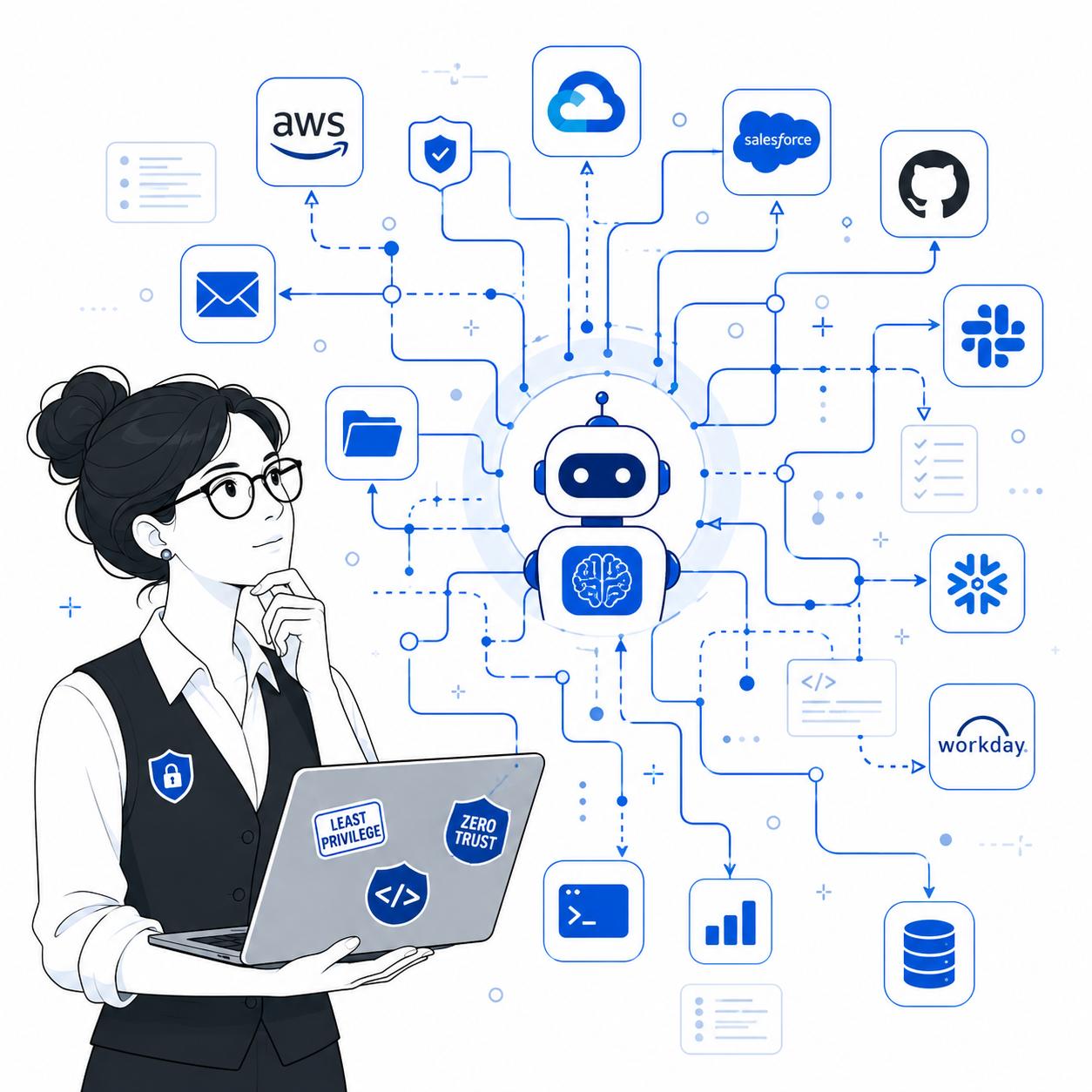
Hybrid cloud security is a strange beast. Organizations adopt multiple clouds for agility and resilience, or inherit them during mergers and acquisitions, or because someone in engineering clicked “free trial” on a Friday and now it’s in production. Before long, you have AWS, Azure, GCP, a side order of Kubernetes, and a dash of on-prem. Every platform comes with its own identity model, its own permission patterns, and its own delightful way of hiding risk in plain sight.
CISOs, or indeed any of us, don’t wake up thinking, “I’d love a bit more complexity today.” Yet here we are, wrestling with entitlements sprawled across clouds that refuse to behave the same way.
1. The illusion of control: ‘We’ve got IAM covered’
Traditional IAM teams can assume their central directory has everything in hand, but this may be one of those cybersecurity urban legends. In practice, each cloud platform has invented its own miniature universe of roles, policies, and hidden inheritance.
AWS says “policy documents.”
Azure says “role assignments.”
GCP says “IAM bindings.”
On-prem AD says, “Good luck, kids.”
The result? Over-permissioned identities who can do far more than anyone realizes. You end up with standing privilege everywhere: dormant roles, legacy groups, and access you “temporarily” granted in 2021.
Fix: You need continuous entitlement discovery across every environment. Not once a quarter, not during an audit, but all the time. Modern identity-security platforms automate this, giving you unified visibility and normalizing cloud-specific access models into something humans can read without a stiff drink.
2. The Joiner-Mover-Leaver trap
Most organizations still rely on HR-driven provisioning as their north star. Useful, yes. Sufficient, not even close.
The problem is simple: cloud access rarely maps neatly to job titles. A developer might move teams three times, join an incident squad, pick up a temporary admin permission, take part in their first red team exercise, and never lose any of it. HR has no idea. Security only finds out during an audit or a breach.
In hybrid cloud security, JML workflows alone solve about 10% of the real problem.
Fix: Identity lifecycle automation needs to extend beyond HR updates. Modern systems correlate job roles with actual usage and auto-revoke entitlements that aren’t used, needed, or safe to keep. They enforce least privilege not as a project but as a background habit, like brushing your teeth, but for risk.
3. Emergency access: the CISO’s ulcer multiplier
Production breaks. Someone needs admin. They get the admin. Everyone promises they’ll remove it later. Nobody does.
In multi-cloud setups, emergency elevation becomes a messy cocktail of breakglass accounts, manually granted roles, and ticket trails that make auditors feel faint.
Fix: Time-boxed, just-in-time access. Not bulky roles, but to single, precise groups or roles. Purpose-built platforms (like Trustle) can mint temporary entitlements with surgical scope, and revoke them automatically when the clock runs out. No lingering admin access. No forgotten breakglass keys. No ulcers.
4. Token theft and session replay: the quiet killers
Hybrid environments mean more human identities, more machine identities, more APIs, and more opportunities for attackers to hijack sessions. Once a token is stolen, it behaves “normally,” and normal behavior is hard to distinguish when privilege is already sprawling everywhere.
Adversary-in-the-middle campaigns thrive in this chaos. Even internal teams often struggle to define what “expected access” actually looks like across AWS, Azure, and GCP.
Fix: Shift the focus from logins to what identities actually do with the access they receive. Modern identity-security tooling gives visibility into how elevated permissions are used, which privileges sit idle, and which entitlements shouldn’t exist.
By highlighting unusual or risky privilege use, especially after elevation, you can shut down compromised sessions before attackers pivot deeper into the environment.
5. One cloud outpaces another, and now you’re blind
When teams move faster in AWS than in Azure, or adopt GCP for ML workloads while security is still writing Entra ID documentation, the oversight gap widens.
Shadow cloud environments flourish. A Kubernetes cluster appears. A new VPC pops up. Someone enables an OAuth app with the permissions of a minor god. All of this bypasses your traditional controls because the cloud is allergic to waiting for governance meetings.
Fix: Continuous discovery and risk awareness across all connected environments. Systems built for hybrid cloud estates surface anomalies, stale roles, zombie service accounts, dangerous OAuth grants, and unused admin permissions before they evolve into CNN headlines.
6. Manual approvals: the illusion of governance
The classic scene: elevation requests pile into Slack. Managers skim the first sentence and click “Approve” because production is on fire and they’re juggling five change windows.
You gain process. Not security.
Human-driven approvals in hybrid estates become inconsistent, unpredictable, and largely decorative.
Fix: Risk-aware automation. Modern platforms integrate directly into Slack or Teams so engineers can request access without wandering off into ticket purgatory. Policies auto-approve low-risk requests and route higher-risk ones through tighter scrutiny. The workflow remains visible, auditable, and mercifully free from “rubber-stamp” fatigue.
7. Machine identities: the forgotten majority
In hybrid cloud security, human users are outnumbered by service accounts, bots, CI/CD tokens, ephemeral workloads, and AI agents. These identities often have broad, persistent access because nobody tracks what they should have.
Attackers adore this.
Fix: Machine identity governance: discovery, inventory, rotation, usage monitoring, and least-privilege enforcement for non-humans. Modern tooling gives parity between human and machine identity controls, rather than treating machines as immortal super-users who somehow deserve admin by birthright.
Where Organizations Actually Win
The organizations that thrive in hybrid cloud security do three things well:
- Unify visibility across all IAM systems, cloud platforms, and SaaS providers.
- Reduce standing privilege using just-in-time elevation and automated revocation.
- Automate governance with ChatOps workflows, policy-driven approvals, and behavioral intelligence.
This is exactly what modern cloud-identity security platforms deliver: multi-cloud entitlement discovery, JIT access, zero standing privilege, risk-aware automation, and identity-behavior analytics, all wrapped into a single, understandable model.
Try it. Our free trial can be up and running in 30 minutes.
It replaces the guesswork with evidence. It replaces manual approvals with policy. It replaces “hope this isn’t exploitable” with actual enforcement.
Hybrid cloud security stops being chaos. It becomes manageable and predictable, and it gives you something you can discuss in a board meeting without the room falling silent.